Life started earlier than expected- part 2

In the first part, I talked a lot about how scientists figured out LUCA evolved. LUCA, or Last Universal Common Ancestor, is believed to be the earliest common ancestor of all life on Earth! If you missed it, you can read that newsletter by clicking here.
(Science Graphic Design / University of Bristol)
LUCA has a lot of interesting qualities! In this second part, I’ll share three of the coolest things about LUCA—and we’ll wrap up with a major discovery that could change what we know about the past.
Three Fascinating Things About LUCA
It Had an Immune System
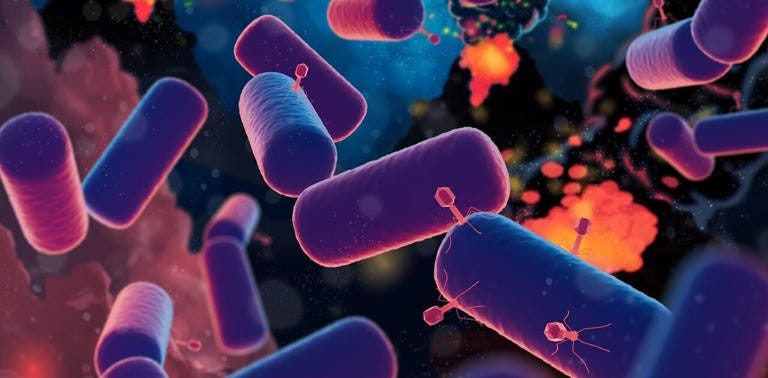
LUCA actually had an immune system! Now, by today’s standards, it wasn’t nearly as strong as ours, which helps us fight off things like the flu. But LUCA’s immune system hints that there may have been viruses around 4.2 billion years ago. That’s surprising!
This system used something you may have heard about recently: CRISPR-Cas—the same thing that changed genetic engineering forever.
In simple terms, it worked like a search-and-destroy tool. LUCA’s version recognized invading RNA (not DNA) and then destroyed it. This wasn’t as complex as today’s CRISPR systems but shows that even then, life was defending itself against viruses.
It Had Unique Energy Sources
Unlike animals, LUCA didn’t use oxygen to get energy. That was true for all life 4.2 billion years ago.
Instead, it relied on carbon dioxide and hydrogen. One way it did this was with a process which turned carbon dioxide into energy and released acetate as a byproduct.
The second way was with Ni-Fe Hydrogenase, a process that turned hydrogen into energy. Thanks to these processes, LUCA could thrive in places like hydrothermal vents or volcanic areas with plenty of hydrogen.
It Had Sunscreen
This is my favorite part! Believe it or not, LUCA had a form of natural sunscreen—but not like the spray or cream we use today. Instead, it had something called spore photoproduct lyase.
UV light can damage DNA, which is dangerous. Spore photoproduct lyase repaired DNA exposed to UV light, allowing LUCA to survive in sunlit areas with plenty of hydrogen, like near volcanoes.
Rewriting the Late Heavy Bombardment?
With the discovery that LUCA existed 4.2 billion years ago, we might need to rethink the Late Heavy Bombardment.
So, what’s the Late Heavy Bombardment? It’s a time between 4.1 and 3.8 billion years ago when meteors were crashing into the Earth more frequently. We know about it because of the scars left by large impacts on the moon.
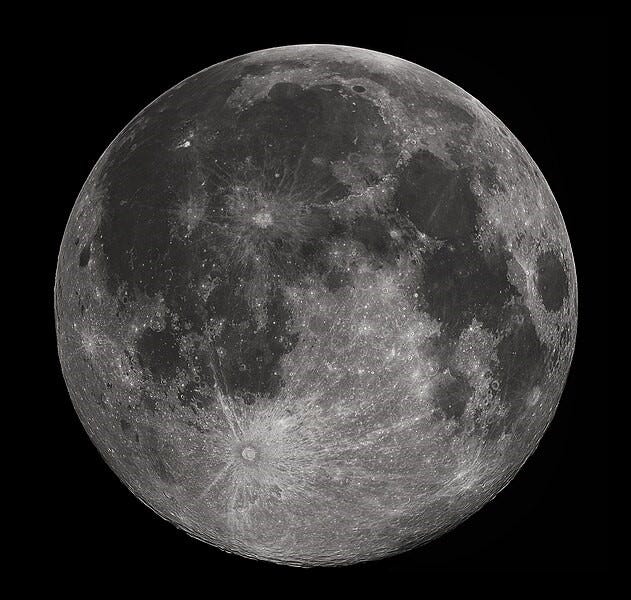
Image of a full moon, showing craters left by meteors.
(Wikimedia Commons, Gregory H. Revera)
Now that we know life was around 4.2 billion years ago, this event might not have been a mass extinction. No one knows for sure, but it opens the door for new theories.
Here’s my own little theory on what it could mean!
My Theory on the Late Heavy Bombardment
I think that during the Late Heavy Bombardment, some large meteors crashed and wiped out most of LUCA’s population. But a few survived, and those survivors are the ancestors of all the amazing life we see today.
We can’t predict the future, so who knows if this theory will hold up. But if you want to find out more as scientists learn new things, subscribe to stay updated!