LEDs: The amazing E-Light

Have you ever wondered about those efficient lights called LEDs? They're used in various devices like lights and computers. But did you know that LEDs can easily break if there's too much voltage? Let's explore the fascinating world of LEDs or Light Emitting Diodes and how they function.
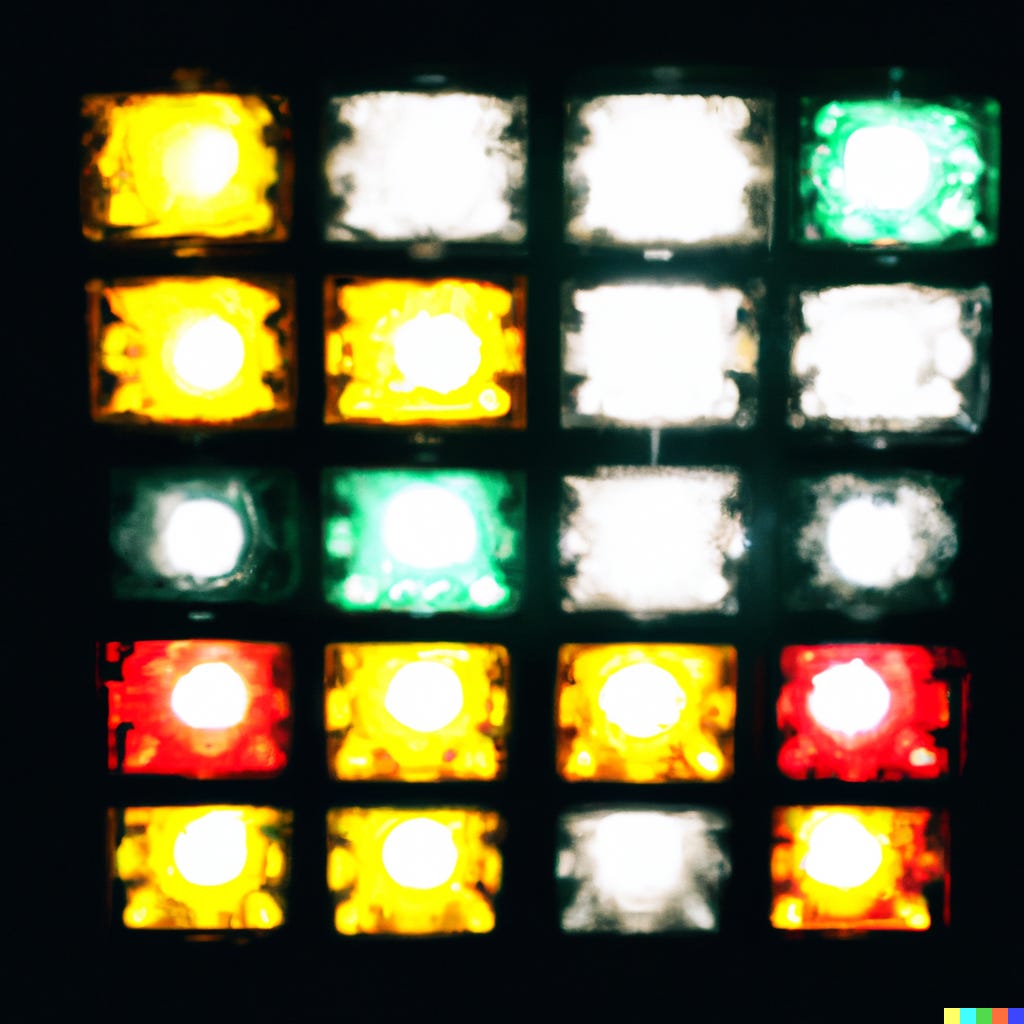
So, what exactly is an LED?
An LED is a special kind of light that needs less power to glow. It comes in different colors and types, and there's a specific way to connect it to a battery. LEDs use semiconductor materials. Let's dig deeper into their workings.
How does an LED work?
LEDs work using semiconductor materials, just like diodes. Diodes rectify electricity and make it flow in one direction, while LEDs produce light. Inside an LED, there are two metal pieces that help the flow of electrons. These metal pieces indicate the positive and negative layers, with the larger one representing the negative layer and the smaller one representing the positive layer. The negative layer contains a cone with the semiconductor material. Now, let's talk about colors.
LEDs are special because they are colorful and efficient. The color of an LED doesn't come from the glass but from the waves of visible light it emits. Different elements, including silicon, gallium, aluminum, arsenic, and phosphorus, create these colors. Elements like carbide and nitride also play a role in forming the colors.
Here's how it works:
Inside the LED, there is a P-N junction. There are 2 layers on top of the junction. The P layer has holes, and the N layer has extra electrons. When a voltage is applied, the electrons move from the N layer to the P layer. As they do so, they release energy in the form of light, which escapes through the cone.
But be careful! LEDs need a resistor to run properly because they require around 2 volts to operate. Too much voltage can break them. That's why most LED circuits include a resistor.
In addition to standard LEDs, there are many exciting variations like RGB LEDs, LEDs with multiple functions, and LEDs with different colors. LED light bulbs can even create white light by combining all the colors. Did you know that TV remotes use infrared LEDs? LEDs are used in various circuits, including LED tape and SMDs.
LEDs are truly amazing, and there are so many different types to discover!
That's all for now. Have a Lively Exciting Day!